
Sleeping on a plane—especially in economy—isn’t easy.
For years, I’d find myself drifting in and out of sleep, only to be woken up repeatedly—never quite getting the rest I needed. It didn’t matter how tired I was.
What I eventually realised was this:
It wasn’t just comfort that was the problem—it was light.
Even if you manage to fall asleep, your brain keeps reacting to changes in light—pulling you out of deeper rest.
Over time, I found that controlling light made a bigger difference than I expected.
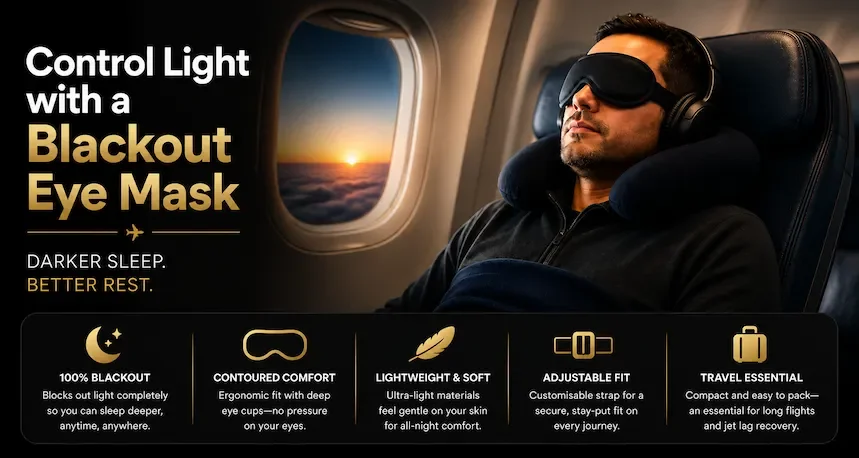
And once I added a proper blackout eye mask into my setup, everything changed.
How to Sleep on a Plane (Light Is the Missing Piece)
If you struggle to sleep on flights, it’s easy to assume the issue is comfort.
Seat position, legroom, temperature—all of those matter.
But from experience, one of the biggest factors is something most people overlook:
Light.
Even small changes in brightness can interrupt your sleep cycle, especially when you’re already in an unfamiliar environment.
Light is one of the biggest factors affecting sleep on a plane—and one of the hardest to control.
That’s what leads to the constant wake-ups.
Remove that variable, and it becomes much easier to stay asleep.
Why You Have No Control Over Light on a Plane
Flying is one of the few environments where your surroundings can change without warning.
You might fall asleep in a dim cabin—only to be woken up by changes you can’t control:
full cabin lighting during meal service
a nearby passenger opening the window shade
someone switching on a reading light beside you
Individually, these aren’t major disruptions.
But combined, they create a pattern of interrupted sleep.
There’s also a big difference depending on the type of flight.
On long-haul flights, airlines often try to create a “sleep period” after the main meal—dimming the cabin lights and encouraging passengers to close window shades.
But on shorter or connecting flights, especially during the day, that rarely happens.
Cabin lights often stay on, window shades remain open, and the environment stays bright throughout the flight.
Even on shorter night flights, it’s less common for a proper sleep period to be established.
That inconsistency makes it much harder to rely on the environment for rest.
A blackout eye mask removes that unpredictability completely.
Why Light Disrupts Sleep More Than You Think
Sleep isn’t just about closing your eyes—it’s about staying in a consistent state.
Light plays a major role in that.
Even with your eyes closed, your eyelids don’t fully block out light. Your brain can still detect changes in brightness—and it reacts to them.
When your brain senses light, it naturally shifts you toward a more alert state—even if you don’t fully wake up.
On a plane, this can mean:
shorter sleep cycles
more frequent waking
less restorative rest
It’s not just brightness that matters—it’s change.
Small shifts in light, or even movement like shadows from people passing by, can be enough to interrupt your sleep without you realising it.
This is why you can spend hours “sleeping” on a flight, but still wake up feeling tired.
By blocking out light completely, you give your body a better chance of staying in deeper, more consistent sleep.
Why Most Eye Masks Don’t Work Properly
Not all eye masks are equal.
Many of the ones you’ll find on flights—or cheaper alternatives—tend to have the same problems:
they don’t fully block out light
they put pressure on your eyes
they shift during sleep
they don’t fit properly
Airline-provided masks used to be more common, but they’re becoming increasingly rare—especially in economy.
And when they are provided, they’re usually designed as a basic “one size fits all” option, often with little or no adjustability.
That can lead to a poor fit—either too tight, pressing against your eyelids, or too loose, allowing light to leak in from the sides.
Both of these work against you.
Pressure on the eyes can make it harder to relax and fall into deeper sleep, while even small amounts of light can interrupt your rest.
If the mask isn’t doing its job properly, it defeats the purpose.
Most of these masks are simple, flat designs with basic straps and minimal shaping around the nose. They’re designed to be cheap and easy to distribute—not to block light effectively for a wide range of face shapes.
What to Look for in a Blackout Travel Eye Mask
A proper blackout eye mask is designed very differently from the basic versions you’ll often see on flights.
Instead of a flat piece of fabric, blackout masks are shaped to fit the face more precisely—particularly around the nose and eye area—to prevent light from leaking in.
From what I’ve seen, more and more passengers now bring their own masks for exactly this reason.
A few key things make a noticeable difference:
Full blackout seal
The mask should contour properly around your nose and face. Basic masks often rely on a small flap of fabric, which doesn’t work well for many people.
No pressure on the eyes
Most modern designs use a 3D shape that keeps the mask off your eyelids.
This makes a big difference—not just for comfort, but because it allows your eyes to move naturally during sleep. That’s important for deeper sleep stages, including REM.
It also makes waking up feel more natural. When you open your eyes, it’s like opening them in a completely dark room—there’s no sudden light or “shock” to your system.
Comfortable for your sleep position
Some masks are better suited to certain sleeping positions than others.
As a side sleeper, I’ve found this especially important.
A mask needs to stay in place without shifting or pressing awkwardly when you’re resting against a seat or pillow.
Adjustable fit
A secure but comfortable fit helps keep the mask in position throughout the flight.
Without that, even a good design can move slightly and let light in.
What I Use Now (and Why I Changed)
I originally used a different 3D eye mask, which worked well at the time.
It lasted through roughly 30–40 long-haul flights—constantly being taken in and out of a bag, used in tight spaces, and packed away again. I also used it in airports and on train journeys, so it saw plenty of use.
Over time, though, design and materials have improved, so I decided to try something more refined.
More recently, I’ve switched to the MyHalos blackout sleep mask, and it’s become a consistent part of my setup.
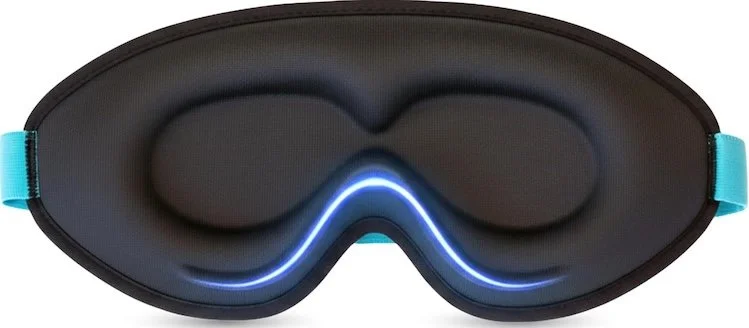
What I like about it:
it blocks out light completely
it doesn’t put pressure on the eyes
it stays comfortable even when sleeping on my side
That last point is important for me. Whether I’m leaning against a seat or travel pillow on a plane or sleeping in a bed, it maintains a proper seal and doesn’t let light in.
That said, no single mask is perfect for everyone.
If you want to explore different options, you can browse a range of blackout eye masks here.
👉 Browse a range of blackout eye masks here
Fit and comfort can vary depending on how you sleep, so it’s worth finding one that works for you.
If you’re exploring options, it’s usually better to focus on blackout performance and comfort rather than brand alone.
It’s also worth checking return policies and reading customer reviews—especially for feedback on fit and sleeping positions—before deciding.
Where Else a Blackout Eye Mask Comes in Useful
Although I mainly use a blackout eye mask for flying, it’s one of those items that ends up being useful in more situations than you expect.
Any time you don’t have full control over your environment, it helps.
For example:
Airports — useful for short rest periods during delays or long layovers
Trains — especially on longer journeys where lighting stays on
Cars (as a passenger) — helps block changing light and movement
Hotel rooms — particularly when curtains don’t fully block out daylight
Daytime rest — often used by cabin crew and frequent travellers to get proper sleep between flights
The same principle applies in all of these situations.
I’ve even used it when trying to rest in bright hotel rooms where the curtains didn’t quite do the job.
When you remove light, it becomes much easier to relax and stay asleep—regardless of what’s happening around you.
How a Sleep Mask Fits Into Your Flight Setup
A sleep mask on its own won’t solve everything.
But when combined with the right setup, it can make a big difference.
For me, that includes:
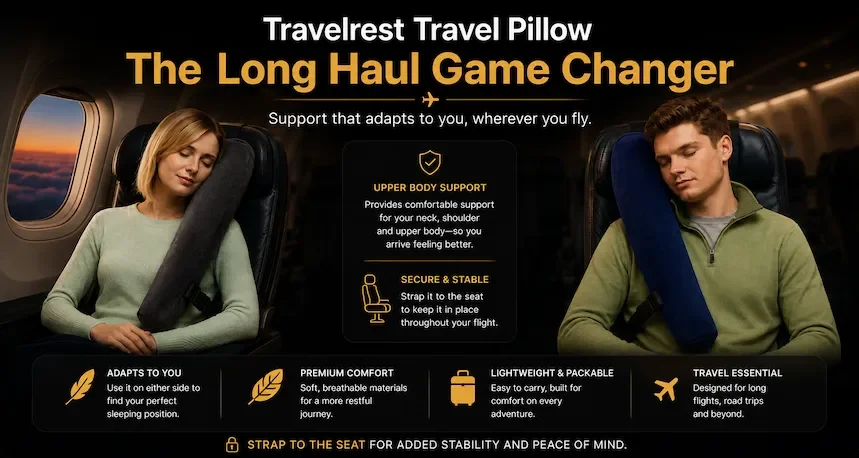
a supportive travel pillow (for head and upper body stability)
a proper travel blanket (to stay warm and maintain consistent coverage)
noise-cancelling headphones (to reduce background noise)
a face covering (to keep my face warm, reduce dryness, and add a layer of protection)
staying properly hydrated before and during the flight
choosing the right seat, one that matches how I naturally sleep
Over time, I’ve found it’s not one item that makes the difference—it’s how everything works together.
The mask handles light.
The rest of the setup handles comfort and stability.
Together, that’s what allows longer, uninterrupted rest.
One Practical Tip Before You Fall Asleep
One thing worth keeping in mind:
When you’re wearing a blackout eye mask, you won’t be aware of what’s happening around you.
That’s generally a good thing—it allows you to sleep without interruption.
But it also means it’s worth making sure everything is secure before you settle in.
keep valuables like your passport and wallet safely stored
make sure any overhead luggage is properly closed or locked
Personally, I tend to keep important items in zipped pockets on my person.
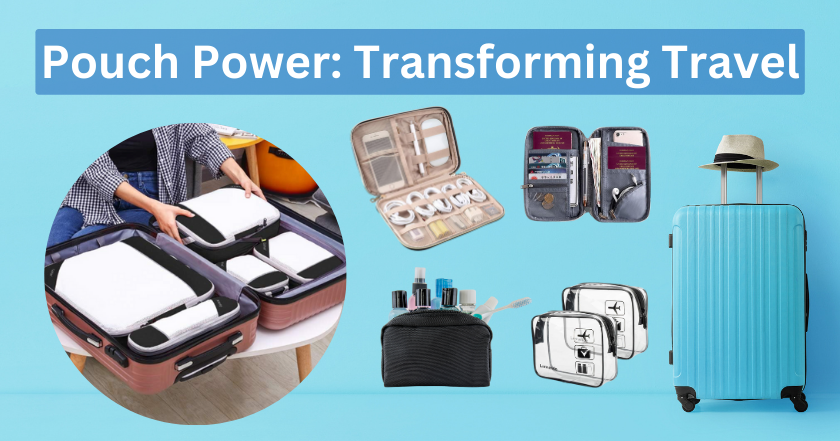
I also make sure my main carry-on is secure—whether that’s in the overhead bin or under the seat—and keep my flight essentials bag close by, with the zips clipped together and the strap positioned so it can’t be easily moved without me noticing.
Once that’s sorted, I can settle in properly and switch off without worrying about what’s going on around me.
Final Thoughts: Is a Sleep Mask Worth It for Flying?
If you struggle to sleep on flights, controlling light is one of the simplest changes you can make.
It doesn’t require a complicated routine or major adjustment—just the right setup.
Used properly, a blackout eye mask removes one of the biggest sources of sleep disruption on a plane.
And combined with a few other small changes, it can turn broken, inconsistent rest into something much more reliable.
It’s a small change—but one that can make a noticeable difference on every flight.
If you’ve tried different approaches to sleeping on flights, or found something that works particularly well for you, I’d be interested to hear—feel free to share your experience.
I’ve found that blackout eye masks become even more effective when combined with a stable long-haul sleep setup focused on reducing light, noise, and unnecessary interruptions throughout the journey, find out more: My Long Haul Travel Setup
Frequently Asked Questions
-
Sleeping better on a plane comes down to controlling your environment as much as possible.
That usually means reducing light, limiting noise, and staying comfortable in your seat.
A blackout eye mask can help remove one of the biggest disruptions—light—while other factors like a supportive pillow, hydration, and seat choice help improve overall comfort and stability.
-
Yes—especially if it blocks out light properly.
Even with your eyes closed, your brain can still detect changes in brightness. On a plane, those changes happen frequently.
A proper blackout sleep mask removes that variable, making it easier to stay asleep for longer and avoid repeated wake-ups.
-
The best eye mask is one that blocks out light completely and feels comfortable for your sleep position.
Look for a design that seals around your nose, doesn’t press on your eyes, and stays in place during movement.
Fit matters more than brand, so it’s worth trying a few options or checking reviews to find what works for you.
-
Airline-provided sleep masks are usually very basic.
They’re often designed as a one-size-fits-all solution, which can lead to poor fit, light leakage, or discomfort.
They can help slightly, but they’re rarely as effective as a well-designed blackout mask.
-
Light signals to your brain that it’s time to be alert.
Even through closed eyelids, changes in brightness can interrupt your sleep cycle and prevent deeper rest.
On a plane, where lighting conditions can change frequently, this often leads to shorter sleep cycles and more frequent waking.
-
Side sleepers should look for a mask that stays in place without shifting or pressing awkwardly against the face.
3D designs that don’t press on the eyes tend to work better, as they maintain comfort and help preserve a proper seal even when leaning against a seat or pillow.
-
Yes—blackout eye masks are useful in any environment where you can’t fully control light.
This includes airports, trains, cars (as a passenger), and hotel rooms where curtains don’t block out all daylight.
They’re also commonly used by frequent travellers and cabin crew to get quality rest during the day.
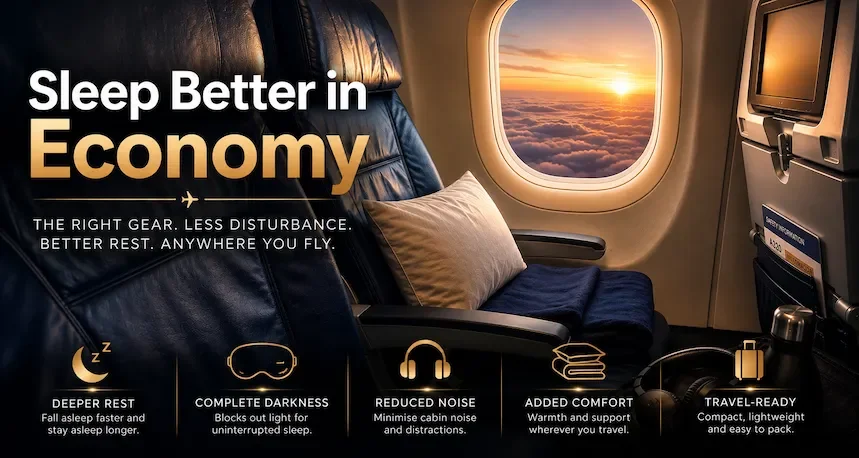
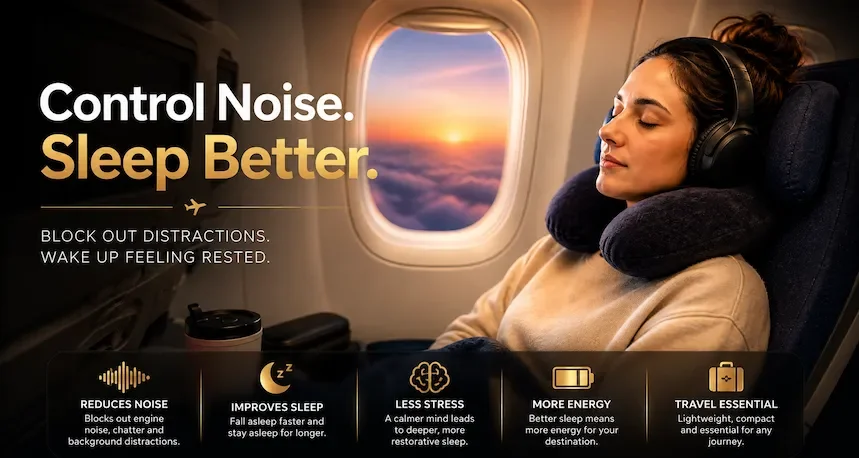
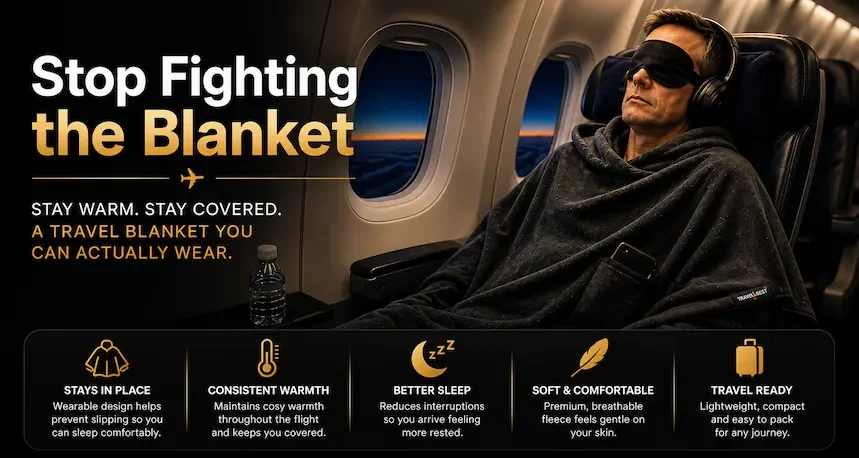




After more than a decade of regular long-haul travel, I’ve gradually refined a travel setup designed to improve comfort, sleep, organisation, and flexibility throughout the journey — from overnight flights and airport waits to delays and unexpected disruptions.