
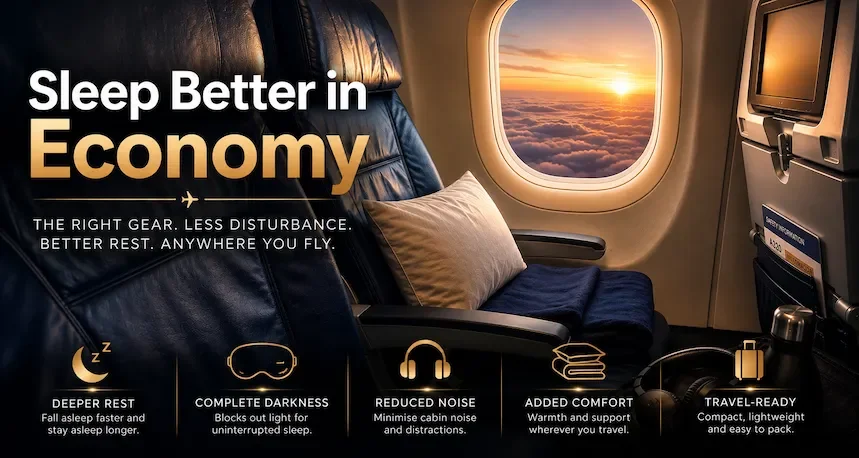
Sleeping properly on a plane—especially in economy class—isn’t easy.
You’re trying to rest while sitting upright in a confined space, surrounded by:
noise
movement
changing temperatures
other passengers
limited personal space
And on long-haul flights, even small discomforts quickly become amplified.
As somebody who’s 6’2”, I’ve found that a slightly awkward sleeping position, poor leg placement, repeated interruptions, or simply not having enough support can easily be the difference between getting a few hours of meaningful rest—or barely sleeping at all.
Most advice focuses on choosing the “best seat.”
But from experience, sleeping well on a plane is less about finding the perfect seat and more about creating a stable setup that works with how you naturally rest.
Seat choice still matters—but so does:
sleep position
body support
movement
noise levels
preparation
how you organise your space around you
Over time, I’ve found that small adjustments in economy class can make a surprisingly large difference to both comfort and sleep quality.
Why Sleep Position Matters More Than Seat Choice Alone
One of the biggest challenges with sleeping on a plane is that the human body simply isn’t designed to sleep upright for long periods.
That means stability becomes incredibly important.
If your body keeps:
shifting position
sliding forward
leaning awkwardly
lacking support
…you naturally wake up more often—even if only briefly.
And over the course of a long-haul flight, those interruptions add up quickly.
This is why sleep position often matters more than the seat itself.
A good sleeping position:
reduces movement
improves comfort
reduces pressure points
helps your body relax more naturally despite the limitations of economy seating
For taller travellers especially, positioning makes a major difference.
One simple adjustment that helps immediately is sitting properly against the back of the seat.
If your hips and lower back are slightly forward, you effectively reduce your usable legroom by the same amount.
And in practice, the biggest pressure point is often not your lower legs—but the upper leg area between the hip and knee, where limited seat pitch quickly becomes uncomfortable on long-haul flights.
Even losing one or two inches of usable space can noticeably affect comfort over time.
Sitting fully back in the seat allows:
your legs to stretch more naturally
your knees to sit more comfortably
your body to maintain a more stable sleeping posture
I also tend to use the same positioning technique even when I’m awake on longer flights—not just for sleep, but because it makes the limited space feel noticeably more usable overall.
Window vs Aisle: Which Is Better for Sleeping?
Window seats are often considered the best seats for sleeping on a plane—and there are a few good reasons for that.
Window Seat Advantages
fewer interruptions from other passengers
physical support from the aircraft wall
slightly more shoulder space
easier to stabilise your upper body while resting
The aircraft wall gives you something to lean against, which helps reduce side-to-side movement while sleeping upright.
Window seats also often provide a few extra inches of usable shoulder space beyond the seat boundary itself, which can make economy seating feel slightly less restrictive.
And there’s another factor many people overlook:
Your natural sleeping side matters.
For example:
if you naturally sleep leaning to your right side, a right-hand window seat may feel more natural
if you naturally lean left while sleeping, the opposite may feel more comfortable
That extra support can make a surprisingly large difference on overnight flights.
Window Seat Drawbacks
Of course, window seats also come with trade-offs:
harder to get in and out of
more awkward during meal service
less direct aisle access
If you regularly need to get up during the flight, they can become frustrating over longer journeys.
Interestingly, I’ve found that some travel pillows—particularly those that support both the head and upper body—can recreate a similar feeling of stability even when you’re not sitting by the window.
That’s particularly useful for aisle seats, where proper upper-body support helps prevent you drifting sideways into the aisle while sleeping and potentially being bumped by passing passengers or crew.
In practice, that means the “perfect seat” sometimes matters less once your overall setup improves.
Best Plane Seats for Tall Travellers
At 6’2”, I’ve learned very quickly that sleeping comfortably in economy often comes down to how efficiently you use the limited space available.
Legroom obviously matters—but posture matters just as much.
Bulkhead seats and exit rows can provide significantly more room for stretching your legs, although they come with trade-offs of their own.
For example:
bulkhead seats often have fixed armrests and fixed tray tables
exit row seats may restrict where bags can be stored during take-off and landing
many exit row seats do not recline as far as regular economy seats
If there’s an empty regular economy seat beside you and the armrest lifts, it can:
create noticeably more usable space
allow you to reposition more naturally
make it easier to stretch slightly sideways
reduce the cramped feeling of economy seating
On many aircraft, the release button is hidden underneath the armrest near the hinge.
That said, not all armrests lift—particularly:
bulkhead seats
exit row seats
certain premium economy layouts
Again, this is where sleep position becomes important.
Extra legroom alone won’t necessarily make you comfortable if your posture is poor or unsupported.
But when combined with:
good positioning
proper support
reduced movement
…even standard economy seating can become far more manageable on long-haul flights.
How Different Parts of the Plane Affect Sleep
Not all areas of the aircraft feel the same during a long-haul flight.
Different parts of the cabin experience different levels of:
noise
movement
passenger traffic
interruptions
Generally speaking:
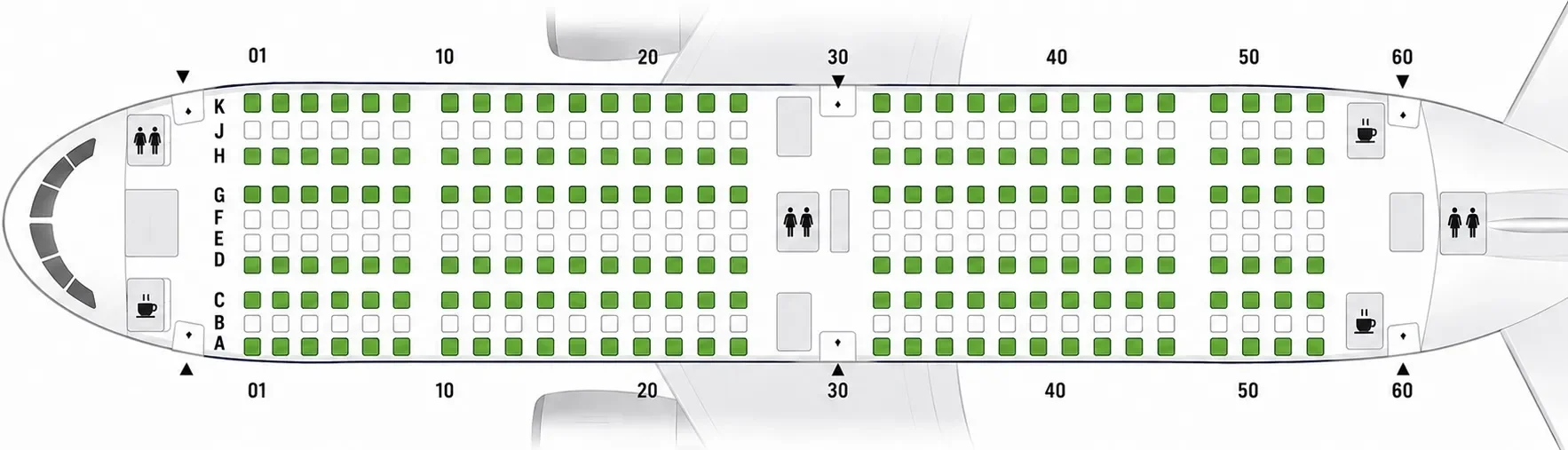
seats near the front of the cabin are often quieter
seats over or behind the wing tend to experience more engine noise
seats near galleys and toilets usually have more movement and interruptions
Aircraft cabin noise can vary considerably depending on aircraft type and seat position, but economy cabins often sit somewhere around 70–85 decibels during flight.
That’s enough background noise to become tiring over long periods—especially when combined with sudden sounds like:
trolley movement
conversations
call-button chimes
lavatory flushing
nearby passengers
In fact, one setup I’ve personally found surprisingly effective is sitting in the last row before a bulkhead wall.
If you have good noise-cancelling headphones, the increased activity nearby often becomes far less noticeable.
And because there’s no passenger directly behind you, you can usually keep your seat fully reclined for most of the flight without worrying about disturbing anyone else.
Managing Noise Makes Seat Choice More Flexible
One of the biggest improvements I’ve made to long-haul travel is properly controlling cabin noise.
Once you reduce the overall noise level around you, many of the disadvantages of certain seats become far less important.
Good noise-cancelling headphones create a much calmer and more controlled environment.
The moment I put mine on, the cabin noise drops into a much softer background level.
You’re still aware of your surroundings—but everything feels:
more distant
less intrusive
more controlled
Some sounds still come through, but at a much lower intensity.
That reduction in environmental stress makes it much easier to:
relax
focus
sleep
I’ve also found myself feeling noticeably more rested after long-haul flights since consistently using good noise-cancelling headphones.
And importantly, they give you far more flexibility when choosing where to sit.
Seats that might otherwise feel too noisy suddenly become perfectly manageable.
Creating a Stable Sleep Setup in Economy
Over time, I’ve realised that sleeping well on a plane is less about one single product or trick and more about creating a stable overall environment.
Everything should work together with as little friction as possible.
For me, that typically includes:
a supportive travel pillow (for head and upper body stability)
a proper travel blanket (to stay warm and maintain consistent coverage)
a blackout eye mask (to remove light)
a face covering (to keep my face warm, reduce dryness, and add a layer of protection)
noise-cancelling headphones or earplugs
an organised in-seat essentials bag
The goal is to reduce unnecessary movement once you’re properly settled.
One thing that helps significantly is keeping important items within easy reach.
Rather than constantly reaching underneath the seat in front, I prefer to keep my in-seat essentials bag positioned close by while sleeping.
Usually, I’ll place it just behind my legs once I’m settled into position.
This keeps important items:
accessible
stable
easy to reach
less likely to fall into awkward gaps
To stop the bag moving around while I sleep, I’ll often:
loop the strap around one leg
secure the zips together with a small carabiner
It’s a small detail—but reducing movement and keeping everything organised helps create a calmer, more stable sleep setup overall.
Prepare Your Space Before the Cabin Settles
One thing that makes a surprisingly large difference on long-haul flights is preparing your space properly before most passengers start trying to sleep.
After meal service, the cabin often becomes awkward to move around in.
There are:
trays everywhere
passengers adjusting seats
cabin crew collecting items
people squeezing past each other in the aisles
And once everyone starts settling down, even simple movements become more awkward.
Small adjustments made early can make the transition into sleep much smoother later on.
For example, many tray tables partially fold in half, which can create extra space when moving in and out of your seat before trays are collected.
On some seats, lifting the armrest can also make repositioning easier—particularly if you need to slide sideways into your seat while nearby passengers are still eating.
It also reduces the risk of awkwardly catching or disturbing trays while trying to reposition yourself in a confined row.
These details sound minor—but reducing unnecessary movement and disruption later makes it much easier to settle into a comfortable sleeping position once the cabin quietens down.
Movement, Stretching, and Long-Haul Comfort
Although creating a stable sleep setup is important, staying completely still for an entire long-haul flight usually isn’t ideal either.
Sitting in one position for very long periods can leave:
your legs
hips
knees
lower back
…feeling stiff and uncomfortable—especially in economy class where movement is naturally restricted.
Simple seat-based leg movements and occasional walks around the cabin can make a noticeable difference to overall comfort during longer flights.
Some travellers also use in-flight compression socks, to support circulation during extended periods seated.
The goal isn’t to constantly move around the cabin—it’s simply to avoid remaining completely static for many hours at a time.
Balancing good rest with occasional movement tends to make long-haul travel feel far more manageable overall.
Small Economy-Class Comfort Tweaks That Help
Some of the best improvements to comfort on long-haul flights come from surprisingly small adjustments.
For example, if there’s an empty seat beside you and the armrest lifts, raising it can:
create more usable space
reduce the cramped feeling of economy seating
make it easier to stretch slightly sideways
improve overall sleeping comfort
Small posture adjustments also make a difference.
Keeping:
your hips fully back in the seat
your upper body properly supported
your legs naturally extended
unnecessary twisting or reaching to a minimum
…all help reduce fatigue over time.
None of these changes transform economy class into business class.
But combined together, they can significantly improve how comfortable and rested you feel by the end of a long-haul flight.
Final Thoughts: Build a Sleep System, Not Just a Better Seat
If you struggle to sleep on planes, the solution usually isn’t just finding the “perfect” seat.
It’s creating a setup that works with how your body naturally rests.
Seat choice still matters—but so do:
sleep position
body support
noise management
warmth
movement
preparation
And importantly, your natural sleeping position should influence where you sit.
For example:
if you naturally sleep leaning to your right side, a right-hand window seat may feel more supportive
if you naturally lean left, the opposite may feel more natural
Once you start improving several of these areas together, economy class becomes far more manageable—even on very long flights.
Over time, I’ve found that sleeping better on planes is really about reducing friction.
Reduce:
unnecessary movement
interruptions
discomfort
awkward positioning
the small frustrations that slowly prevent proper rest
No single tip changes everything on its own.
But together, small improvements can make a surprisingly large difference to how you feel during the flight—and when you land.
If you’ve found your own ways to improve sleep or comfort on long-haul flights, feel free to share them in the comments below.
Seat choice and sleeping position are important, but I’ve found they work best when combined with a broader long-haul travel setup focused on comfort, organisation, warmth, and noise reduction. Find out more: My Long Haul Travel Setup
Frequently Asked Questions
-
Sleeping better in economy class usually comes down to improving several small factors together rather than relying on one single solution.
Seat choice, sleep position, noise reduction, body support, warmth, and preparation all play a role. Creating a stable setup that reduces movement and interruptions can make long-haul flights far more manageable.
-
Window seats are often better for sleeping because they provide wall support and reduce interruptions from other passengers needing to get past.
However, aisle seats offer easier movement and access to the cabin. With the right upper-body support and noise management, aisle seats can also work well for sleeping on long-haul flights.
-
The best sleep position is usually one that keeps your body stable and supported while reducing unnecessary movement.
For many travellers, that means:
sitting fully back in the seat
supporting the upper body properly
keeping the legs naturally extended
leaning toward your natural sleeping side where possible
-
The human body isn’t naturally designed to sleep upright for long periods.
In economy class, limited legroom, noise, movement, awkward posture, and repeated interruptions all make it harder for the body to fully relax and stay asleep.
-
Bulkhead seats can provide extra legroom, which may improve comfort for taller travellers.
However, they also come with trade-offs such as fixed armrests, fixed tray tables, and limited under-seat storage on many airlines.
The last row before a bulkhead can often be a good choice (if you have noise cancelling headphones), as you can keep your seat fully reclined for most of the flight without disturbing anyone behind you. -
Generally, seats closer to the front of the cabin tend to be quieter than seats over or behind the wing.
Areas near galleys and toilets usually experience more movement, conversations, and interruptions during long-haul flights.
-
Yes. Good noise-cancelling headphones can significantly reduce constant background aircraft noise, helping create a calmer and more controlled environment for resting or sleeping.
Many travellers also find they feel less fatigued after long-haul flights when using them consistently.
-
For taller travellers, posture and positioning become especially important.
Sitting fully back in the seat, improving leg extension, reducing pressure around the knees, and choosing seats with better space or support can all noticeably improve comfort on long-haul flights.